MY LIFE SO FAR....

I’d guess that most wildlife artists share a lot of common ground. A close affinity with animals and their habitats coupled with the desire to protect them, these things go without saying. Whilst I share this passion for wild places, I paint first and foremost for the love of painting.
As a child I drew anything and everything, as a teenager, horses and as a commercially minded young adult, waterfalls and landscapes around the Yorkshire dales. My first visit to a gallery hoping to sell my work, (at about 16) ended unsurprisingly in failure. However it did introduce me to the work of pastel artist “Peter Jepson” whose big cat paintings absolutely enthralled me. For reasons unclear even to me it was a further 10 years before I returned to the subject of wildlife in my paintings. A few years spent putting an Ecology degree to excellent use teaching “balanced science” to unbalanced teenagers convinced me to work harder at my first passion and try to become a professional artist.
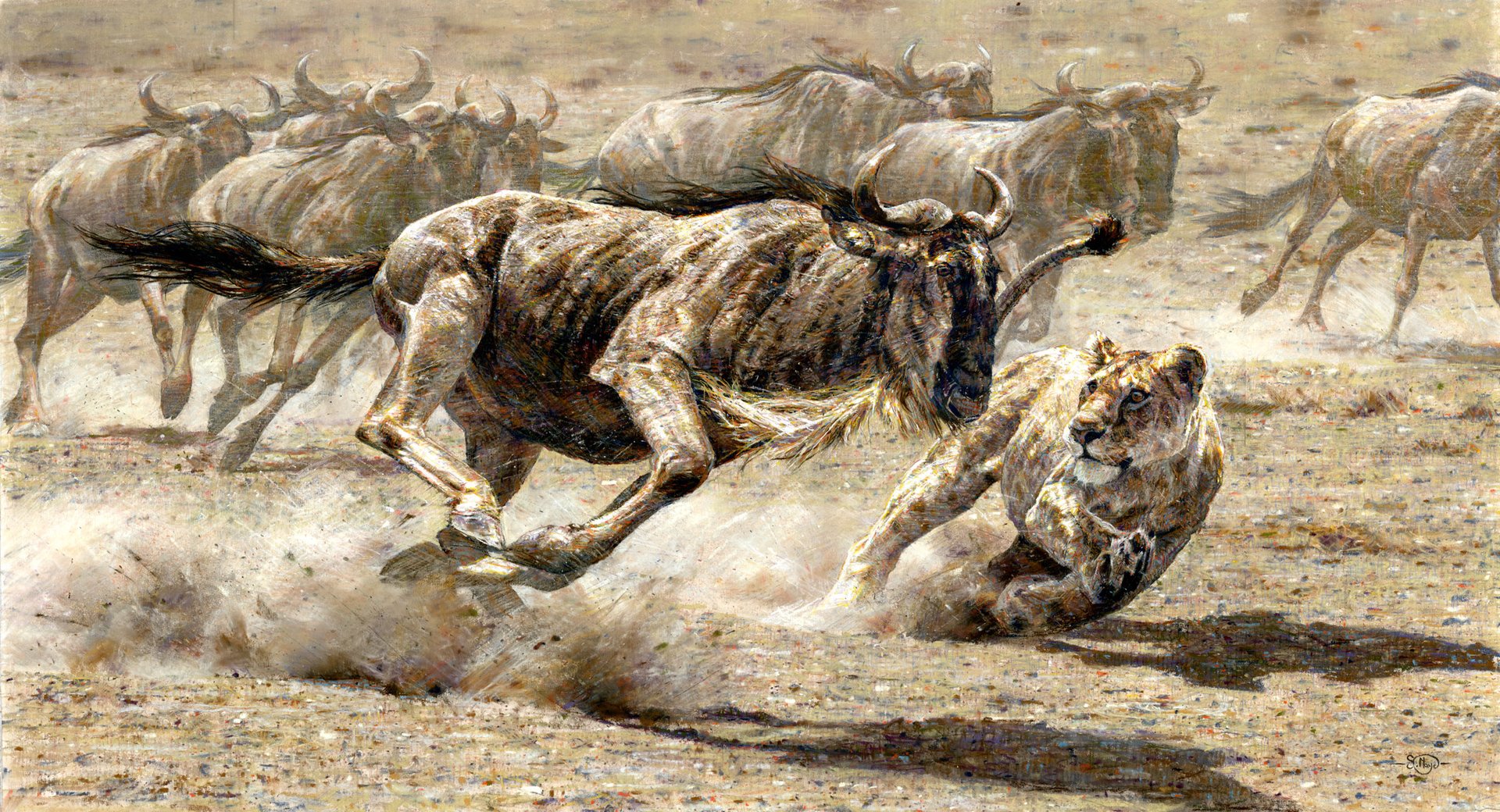
It turned out that waterfalls and landscapes did not sell as well for me as wildlife art. Being inspired by the fantastic pastel work of artists like Kim Donaldson and Dino Paravano this suited me very well. I am a self taught artist and got here mostly by trial and error, but it has been a great journey!
As a mother of two small boys painting has taken a back seat for the last few years. I can honestly and unexpectedly say I have never been more passionate or more excited about where my work is going. At the moment it is not realistic to travel to the places which most inspire me, but the limitations imposed have pushed me in other creative directions. Many of the references I need can be found on my doorstep (snow, grass, trees, rocks, autumn leaves on the ground), and of course it is relatively easy to choose the time of day, strength and direction of light etc if your reference is within easy reach.


METHODS AND TECHNIQUES

Unlike still life or portrait work we have very little control over our subjects, so I find with wildlife art it seems easiest to work backwards. I will start with an idea for the composition in my head and then go about gathering reference material to fill in the details. Of course this approach demands careful consideration of things like the direction of light and the perspective / scale of various elements within the picture.
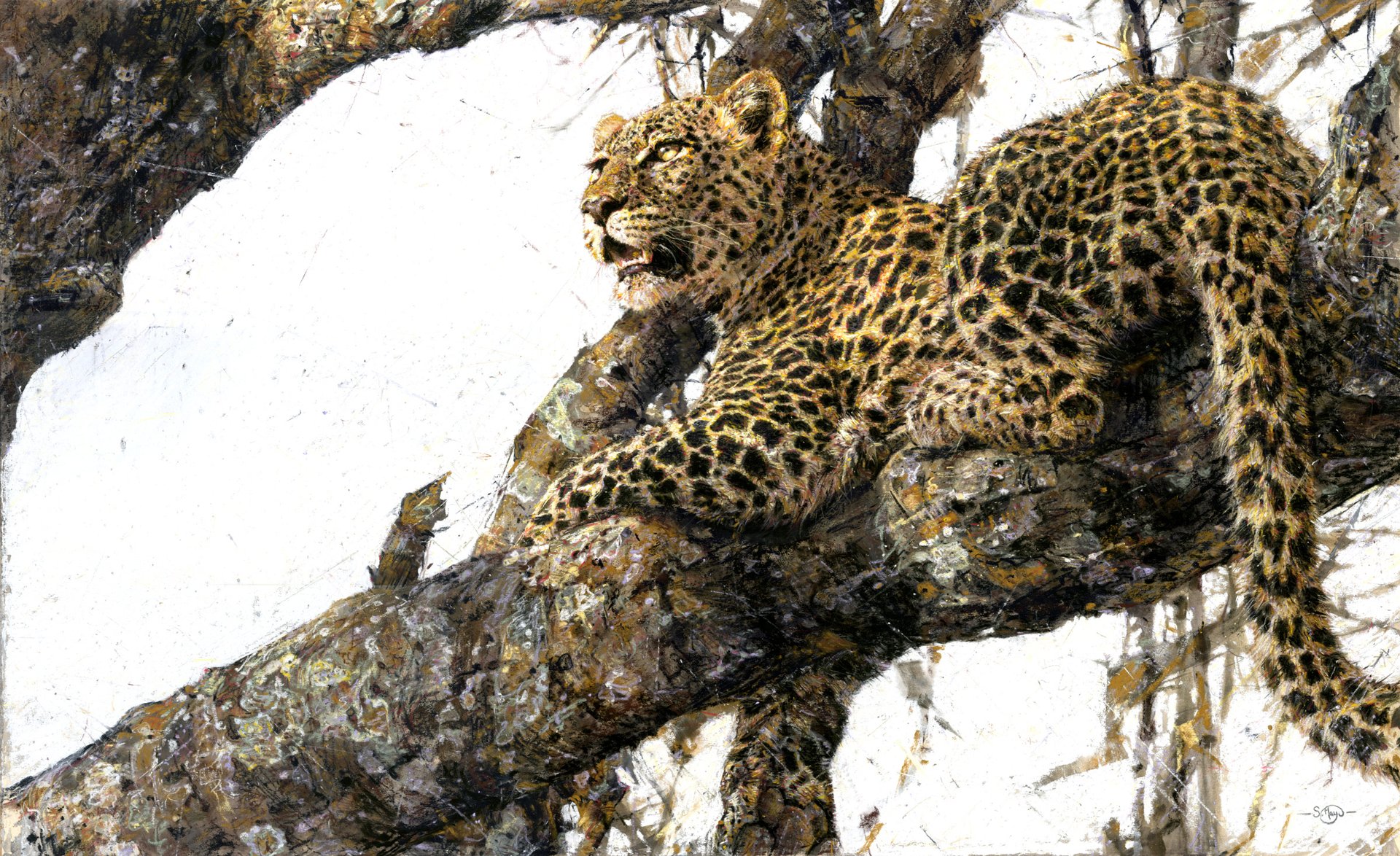
I will typically use a few photographic references to work from for the subject. Then sketch the pose I like best. I spend a lot of time planning the layout, particularly giving consideration to areas of space and simplicity in the composition as I think these can enhance the impact of more detailed areas. Also capturing the atmosphere is very important - whether to use a harmonious blend of shades with soft edges or dramatic contrasting colours. There are so many amazing artists and not that many different subjects, but the possibilities for original compositions still seem endless with a little imagination! 

When I am happy with the composition I sketch it on to my pastel paper. For years I have used sennelier pastel card but I have just got what must be the artist’s equivalent of the seven year itch. The size is a bit on the small side for me and it is very fragile, particularly around water. I have moved on to a finer tooth paper called “pastelmat” which is a bit bigger. It is not very thick so I stick my sheet straight on a piece of adhesive board. I really love it and keep giving bits to everyone I know! The pastel goes on smoothly and quickly, it also blends very well and I checked out the spill factor – no, it does not drop to bits if the cat sneezes on it.

As well as changing my paper I have just started using fixative for the first time (I was always put off by the fact that it darkens the colours (particularly making lighter colours go transparent). I have always just worked vaguely from the top of the paper to the bottom to avoid smudging what I had done. But with more ambitious compositions the limitations of this have become clear... It is hard when you are working slowly and carefully on a small area to keep the “big picture” in mind, also harder to make yourself make dramatic changes if an area is not looking good. So I have started frantically scribbling the whole picture in a few hours using the basic colour scheme for the piece, then lightly fixing it and going over this layer with a second more detailed layer, confident that the overall tones and balance are ok. This approach lets me be more flexible in the early stages of the picture.
However, a dilemma has arisen – I usually prefer the energetic scribble to the neat finished piece which seems to have lost its life. I am reaching the conclusion that “neat” and “life” may be mutually exclusive!

n my latest picture “Amur Ambush” I ended up just taking a bit more care over the frantic scribble and risking it! I could blame the kids (why not?) because it is quicker and time is at a premium... but actually I really love the passion and flare of looser work, I’m just not usually brave enough to let the imperfections go!

I can’t wait to travel again and see my magnificent subjects where they belong, doing what they should be doing.  Although I admit to taking liberties with geography in my pictures, in life the only backdrop worthy of the grace and spirit of wild animals is untamed wilderness, Let’s hope it is still there for our children to appreciate.